
The Psychedelic Industrial Complex
How Wall Street Discovered the Medicine Cabinet of the Gods

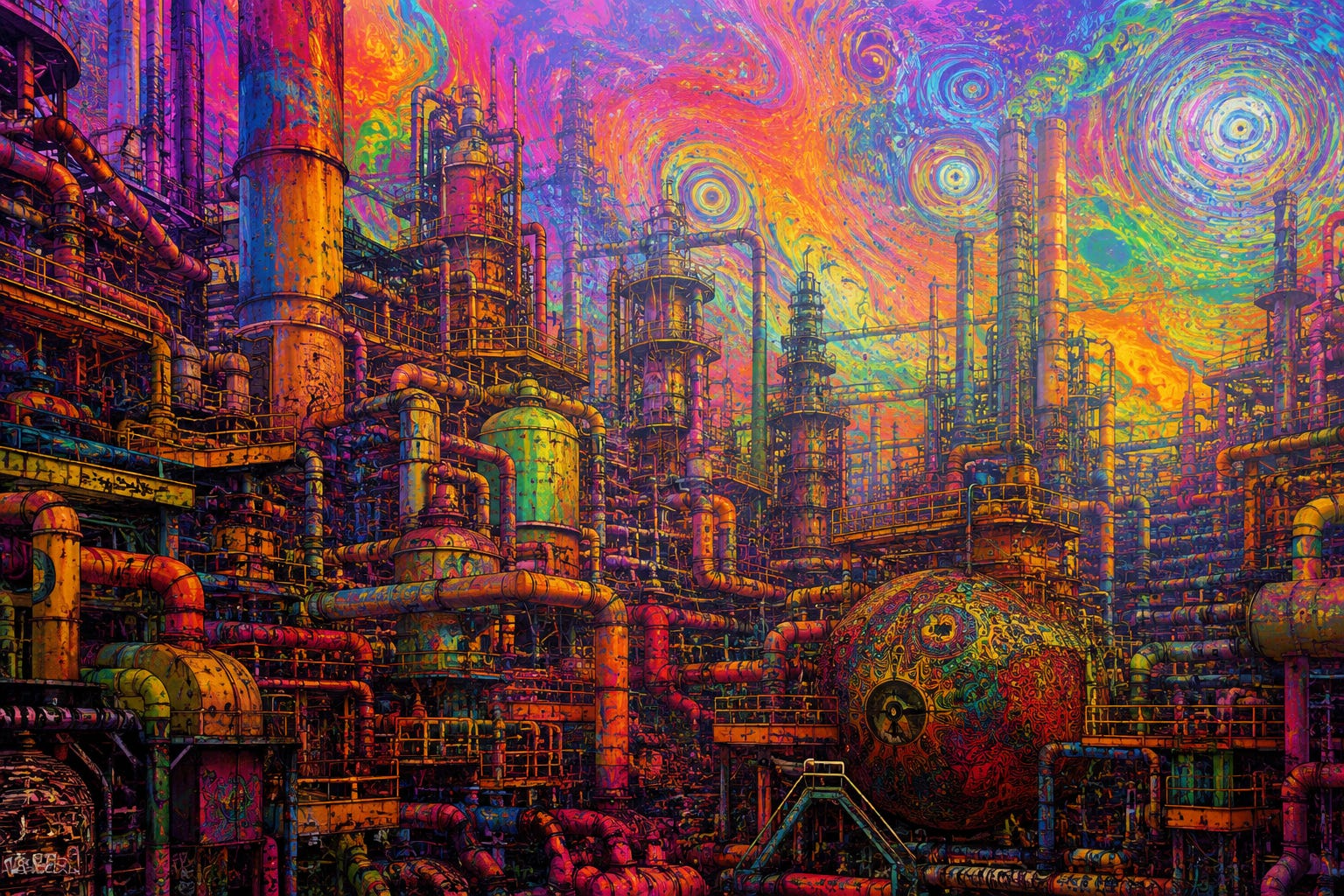
Not long ago, a psychedelic experience required knowing someone. You found your way into the underground through a friend of a friend; a whisper network of trust built over years. The substances you encountered whether psilocybin mushrooms, LSD, or MDMA moved through a shadow economy where the currency was often community rather than cash. That world still exists. But something new has arrived, and it is wearing a suit.
As the psychedelic underground rises from its subterranean base, I have found myself thinking about the challenge of safe and affordable access. Over the past few months, I have created a concept for a foundational platform to raise the standards of psychedelic assisted therapy (PAT). This concept, which I believe is not only beneficial to the safe rollout of PAT, also reflects a path to financial stability. This is not just another non-profit that would have to beg for donations and grants to survive.
I submitted my proposal and slide deck to a number of organizations and investors that claim to support the introduction and scaling of PAT. The first reply I received stated, “At this time, we are very much focused on funding the development of therapeutics (biopharma startups).” There you have it. Though their mission statement says otherwise, the only psychedelics initiatives that they are supporting are focused on where the most money can be made. The focus, as it often is, is on rewarding shareholders and to hell with the stakeholders. Maybe I am just naive in believing that the commerce around psychedelics would be any different than the selling of any other commodity.
In the last decade, a tidal wave of venture capital, pharmaceutical investment, and private equity has crashed into the psychedelic ecosystem. Companies like ATAI Life Sciences, Compass Pathways, MindMed, and Cybin have raised hundreds of millions of dollars on the promise that the molecules discovered or rediscovered in the 1950s and 1960s are the next great frontier in mental health treatment. Their investors are often not counterculture idealists. They are fund managers, family offices, and hedge funds who see a potential market in the hundreds of billions of dollars. Some of these groups do indeed support the perceived Common Good that can come from safe and transformational psychedelic access. Many of them do not.
The pitch is compelling on its face. Mental health in America is in crisis. Antidepressants help some people and do nothing for many others. PTSD devastates veterans and trauma survivors with few effective long-term options. Psychedelics, the research is increasingly showing, can produce profound and lasting therapeutic benefits in a fraction of the sessions required by conventional treatment. Science is real. The need is real. The problem is who gets to decide how, and at what price, the medicine is delivered.
Compass Pathways made headlines, and a few enemies, when it filed broad patents on specific synthetic formulations of psilocybin and on therapeutic methods that critics argued should belong to no one. The patent office agreed to grant some of those claims. The psychedelic research community erupted. Advocates who had spent careers building the scientific case for these medicines suddenly found themselves potentially blocked from using basic laboratory preparations by a single corporate actor. The patents have since been narrowed or challenged, but the precedent was set. The boardroom had arrived at the medicine wheel.
Access is where corporate interest meets its most uncomfortable reckoning. A single ketamine infusion at a private clinic in a major American city can run between eight hundred and two thousand dollars, with full treatment courses costing several thousand more. When the FDA approved esketamine, a proprietary nasal spray version of the same drug, Johnson & Johnson priced it in a range that placed it beyond reach for most uninsured Americans. MDMA-assisted therapy, which produced stunning results in Phase 3 clinical trials for PTSD, was estimated to cost thousands of dollars per treatment course. These are not medicines for the people who need them most.
The policy dimension is equally troubling. Pharmaceutical and biotech companies with large psychedelic portfolios have hired lobbyists in Washington and in state capitals to shape the regulatory frameworks governing these substances. In Oregon, where voters passed Measure 109 to create a legal framework for psilocybin services, the early rollout was plagued by licensing fees and facility costs that effectively priced out many small, community-based providers in favor of well-capitalized operators. The law that was passed by voters as a public health measure is being implemented in ways that favor those with access to capital.
None of this makes the science wrong, or the therapeutic potential any less real. Psilocybin, MDMA, ketamine, ibogaine and related compounds appear to do things for human suffering that nothing else in the pharmacological arsenal can reliably replicate. That matters enormously. But there is a difference between medicines that heal and medicines that generate returns for shareholders. The former should be as accessible as oxygen. The latter will always find a way to the highest bidder.
The psychedelic industrial complex is not a conspiracy. It is simply capitalism doing what capitalism does by colonizing the commons, extracting value, and pricing out the people who discovered the territory in the first place. The Indigenous cultures who have worked with these plant medicines for centuries receive no equity stake. The underground chemists and therapists who kept the knowledge alive during fifty years of prohibition will not be invited to the IPO. The question now is whether there is enough political will and community organizing to build an alternative, one in which healing is not a product, but a right.
In the United States above ground access to psychedelics, with rare exception, is being structured by the same system that allows the rise of the billionaire class but does not have the desire or will to ensure affordable healthcare for its citizens.
No matter which way this works out, remember one thing. The medicine is still the medicine. The question is who holds the keys.
If anyone wants to hear more about my solution to address the challenge of safe PAT access you can contact me at kykeon23@gmail.com.