
Psychedelics Unbounded
The Thing That Won’t Sit Still

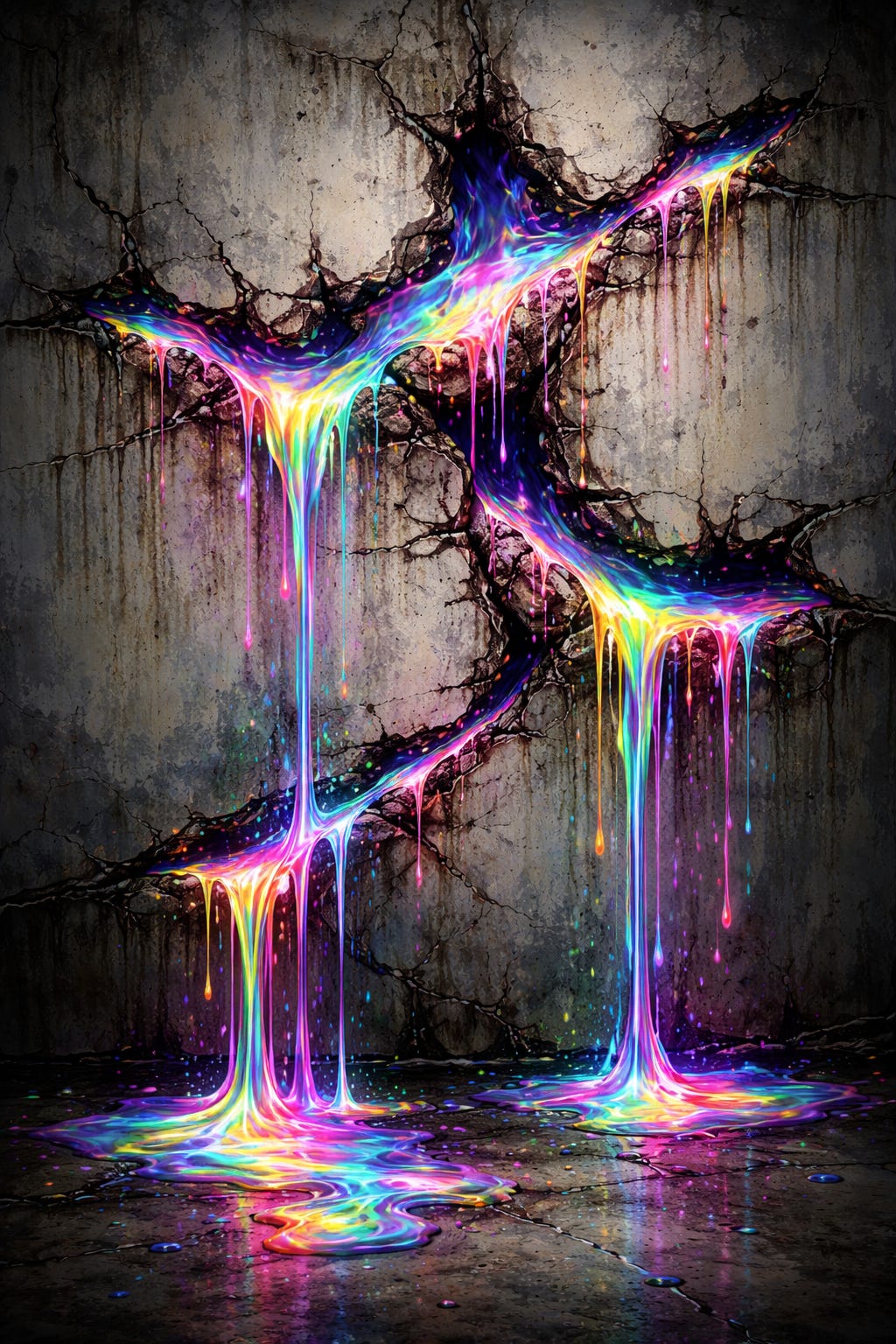
There’s a pattern that keeps repeating itself, like a fractal unfolding across decades. A government, a corporation, an organization, or a clinic decides psychedelics need managing. Papers are drafted, patents are filed, protocols get written but slowly and inevitably, the thing they’re trying to contain seeps through the walls.
Labs get raided, so the mushrooms fruit in closets. Patents get filed, so the mycelium spreads into common ground. Treatment centers standardize dosing, and someone in a forest somewhere is already having the experience the protocols were designed to prevent. It’s not rebellion, exactly. It’s more like watching water find its way downhill. You can build all the dams you want.
What makes psilocybin, LSD, mescaline, DMT and all the rest so persistently ungovernable isn’t their chemistry, it’s what they do. They take the self you’ve been carrying around like a fixed thing and show you it was actually pretty negotiable all along. They dissolve the edges you didn’t know you’d drawn. And once you’ve seen that happen, once you’ve felt the floor drop out from under consensus reality, something shifts in how you relate to authority. Not because you’re against it but because you’ve glimpsed how provisional it all is.
That’s the part no regulatory framework can touch. You can criminalize possession. You can medicalize administration. You can build a billion-dollar industry around ketamine clinics and MDMA therapy. But you can’t legislate what happens when someone realizes their sense of separateness was just a persistent habit. The experience itself exists in an interior, unverifiable, fundamentally private space that rules can’t reach.
The 1960s tried prohibition. Psychedelics were banned, research was shuttered, and the door slammed shut. Except the door was never actually solid. Underground chemists kept cooking. Deadheads kept dosing. Mazatec curanderas kept serving mushrooms in the mountains. The prohibition didn’t erase the substances; it just made them mythic. Outlaw status turned them into symbols of freedom, rebellion, and consciousness itself as contraband.
Now we’re in the medicalization wave dressed up as respectable and clinical. The psychedelic renaissance has PowerPoint decks and peer-reviewed protocols. But even here, there’s slippage. People keep reporting things the studies weren’t designed to measure reflecting encounters with entities, experiences of death and rebirth, and revelations the intake forms have no boxes for. The medicine refuses to stay in its lane.
Biotech companies are fully in the game now as they race to patent molecules and delivery mechanisms. The desire is to turn the unruly psychedelic experience into something scalable, repeatable, and investable. It’s a reasonable impulse because people are suffering. These compounds help so why not optimize? Because the compounds themselves seem to have other ideas. Users don’t describe psilocybin as a tool. They describe it as a teacher, with its own intelligence, its own agenda. Try to reduce that to a product and something essential evaporates. You can synthesize the molecule, but you can’t bottle the encounter. The experience keeps exceeding the container, reminding the clinician, the CEO, and even the patient that they’re not actually in charge here.
Maybe the real story is older than prohibition, older than commerce, older than the 1960s. Fungi have been breaking down rigid structures and redistributing their material for hundreds of millions of years. They resolve boundaries, recycle the fixed into the fertile, and make networks out of what looked like separate things.
Psychedelics work the same way, just on consciousness instead of dead wood. They break down mental rigidities and institutional certainties. They remove the barriers we build between self and others, sacred and profane, controllable and wild. Every attempt to fence them in becomes another demonstration of what they’re trying to teach: some forces don’t submit to domination. Some things are alive in ways that slip through the grid.
What if the lesson here isn’t about better laws or smarter business models? What if it’s about recognizing that psychedelics aren’t resources to be managed but relationships to be entered? That stewardship means learning to work with their nature instead of trying to override it.
Indigenous traditions understand this already. The medicine is respected, approached with ceremony, treated as a participant rather than a substance. There’s negotiation, reciprocity, humility. The modern impulse to control starts to look less like sophistication and more like a category error by trying to own something that can’t be owned, regulate something that exists primarily as transformation itself.
The mycelium doesn’t care about your permits. The vision doesn’t check if you’re authorized. The most alive, most transformative forces in the world have always moved through the cracks in our certainties, reminding us that what we can’t control might be exactly what we need most.
This gets at the core tension perfectly: you can regulate access, but you can’t regulate what happens when someone realizes their sense of self and authority was never as solid as it looked. Psychedelics keep slipping the frame because they operate as relationships, not resources, and every attempt to containerize them just reenacts the lesson they’re delivering. Stewardship, not control, feels like the only posture that actually fits what they are.
“The medicine refuses to stay in its lane.” I love this. ❤️👏