
Psychedelics: American Style
Two worlds, one medicine, two very different maps

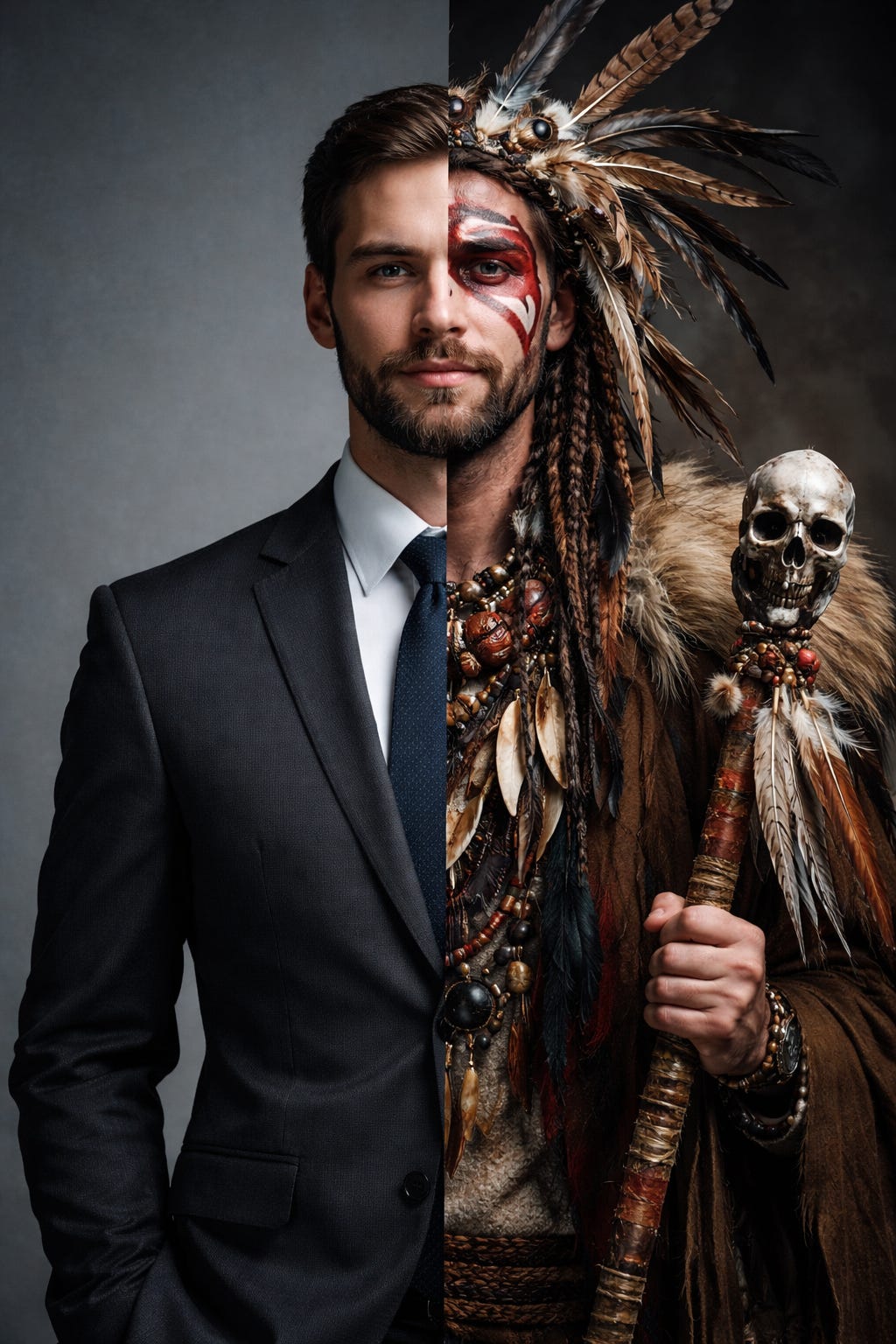
In the long, strange history of American psychedelics, there is a question that keeps surfacing and is never quite resolved. What exactly is the relationship between the ceremonies that have been happening for thousands of years and the ceremonies that started getting invented in the 1960s? On the surface, they look similar with altered states, ritual structure, and intention. But look closer and the resemblance starts to blur.
Indigenous use of peyote, ayahuasca, and psilocybin mushrooms isn’t a practice. It’s a relationship. The plants are not tools, but relatives. The relationship between a Mazatec community and their mushrooms, or a Native American Church roadman and peyote, has been cultivated across generations and are bound to specific land, specific language, and specific mythic histories. Who leads is not a question of credentials or branding. It’s a question of years-long apprenticeship, community recognition, and demonstrated accountability. When something goes wrong in those frameworks, there are mechanisms for correction. The community is the container.
The American psychedelic scene is a recent invention. It draws eclectically from psychotherapy, from New Age spirituality, and from countercultural experiments rather than from any continuous lineage. The medicine is framed as a technology that acts like a tool on the brain. Even when retreat centers dress their sessions in ceremonial language while burning copal and playing icaros from a playlist, the underlying logic is usually therapeutic. The goal is to treat the depression, resolve the trauma, have the peak experience, and go home transformed. The session is a product. The transformation is the deliverable.
This is not a moral failing so much as a historical fact. The American psychedelic movement was born in laboratories and in exile from mainstream culture, not in living transmission from elders. Its leaders, the therapists and the “shamans” who completed three-week trainings in Peru derive legitimacy from credentials, testimonials, and branding rather than from the kind of communal recognition that takes decades to earn. Professional ethics codes are beginning to emerge, but they are uneven and often lag well behind the actual practice.
The contrast is not subtle. American access to psychedelics is widening rapidly with ketamine clinics, state-licensed psilocybin programs in Oregon and Colorado, research trials at major universities, and a booming market of high-end retreat centers where a weekend with mushrooms can run several thousand dollars. The people moving through these spaces are largely white, largely middle and upper class, and largely urban. The people whose medicines made all of this culturally and scientifically legible are often not in the room, and certainly not in the governance structures or the profit-sharing arrangements.
Corporate actors are filing patents while non-profit organizations are accumulating data and policy influence. Billions of investment dollars are moving but very little of it escapes the modern financial paradigm. The Mazatec healers who shared knowledge with R. Gordon Wasson in 1955 and the Shipibo curanderos whose icaros are now played at Brooklyn ceremony circles were foundational to everything that followed. They remain, for the most part, on the outside of the decisions being made about their own medicines.
Psychedelic tourism has made this more visible, not less complicated. Ayahuasca retreat centers in the Peruvian Amazon cater heavily to Westerners seeking healing or insight. Some revenue flows into local communities, but Indigenous commentators have documented patterns of cultural appropriation, unsafe ceremonies run by opportunists, and what can only be described as spiritual extraction. The knowledge and the aesthetics are taken while the reciprocity remains absent.
Is there anything genuine at the intersection of these two worlds? Yes. Both traditions, for all their differences, converge on certain essentials of agreement. Preparation matters, intention matters, and what happens after matters as much as what happens during. Some contemporary American groups are genuinely attempting to do this differently as they work from Indigenous-led ethical charters, experiment with land return, and sit in the discomfort of what it means to work with medicines that aren’t culturally theirs.
Whether this becomes an accountable collaboration or a more sophisticated form of extraction is still an open question as it depends on who defines the terms. Will Indigenous cultures maintain any authority over their own medicines or will they just be mentioned in a land acknowledgment read at the beginning of a ceremony before the facilitator queues up the Spotify playlist?
The medicines have their own history. The question is whether the American psychedelic movement is finally ready to reckon with it.
IMO, those in the White community that are returning to the use of psychedelics are reclaiming their ancient heritage. The rise of Christianity in Europe decimated the ancient religions along with the use of plant medicine, psilocybin mushrooms are found across the globe so why wouldn't ancient Gauls or Celts have used them in their own religious ceremonies? The ancient Greeks used psychedelics as a rite of passage into the Eleusinian mysteries as well, the use of psychedelics is not something relegated to one ethnic group across the history of mankind. Instead of crying cultural appropriation these tribes should be welcoming back those who want to return to the ancient ways of healing because these substances are not theirs, they belong to humanity as a whole.
Agree. Calling out White people in a syncretic living tradition that benefits from all participating is the epistemological equivalent of smoking indoors at this point.
Eco tourism is a billion dollar business, so, not everyone is sad. And wisdom keepers are not noble savages. Drop that projection right now. They are just as capable of petty rivalry and misbehavior as any TikTok influencer. They are highly competitive and are always gossiping about each other. Every culture has a nature based wisdom tradition, the most vibrant being where worlds collide. Umbanda is Brasilian with an African panoply of deities. Should we send someone to go tell them to keep the races separate?